

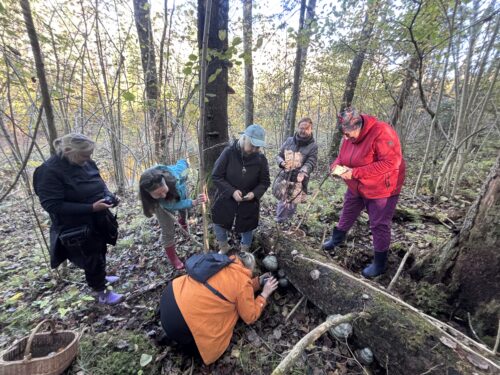
On 18 October 2026, the Latvian Mycological Society held an excursion in the “Salacas ieleja” (Salaca Valley) Nature Park. Its…

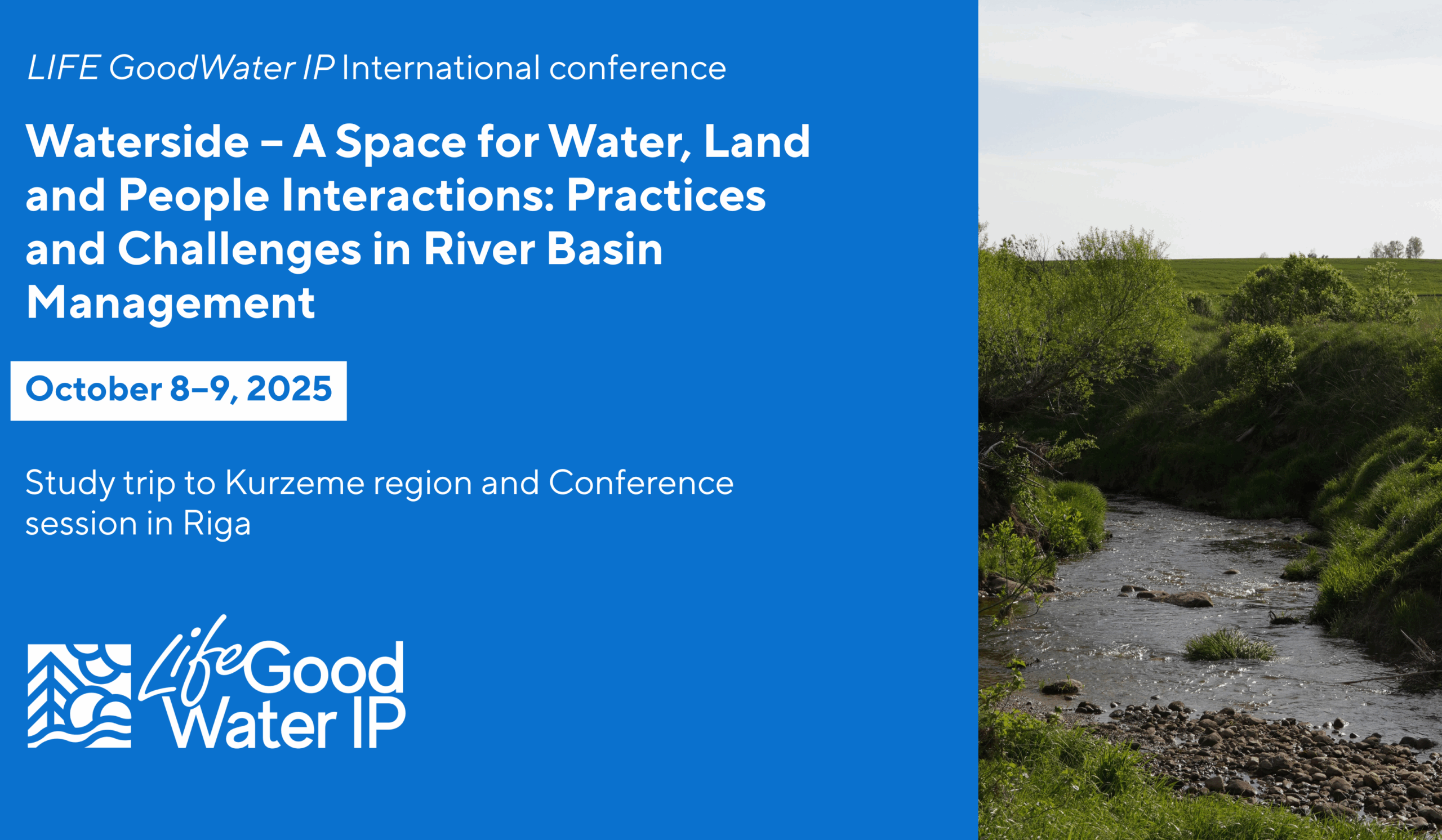
On 8 and 9 October, the third LIFE GoodWater IP international conference “Shores – the space where water, land and people interact: practice and challenges in river basin management”. took place in Latvia. The conference was dedicated to the interaction between aquatic and terrestrial ecosystems and human activities, and to effective river basin management.
The participants spent the first day on a field trip to Tukums Municipality and the Kurzeme region, where they visited several demonstration sites, the Slocene surface-flow constructed wetland built in the project, Šlokenbeka Manor (paying particular attention to how the river is doing there) and the Lake Kaņieris nature trail.
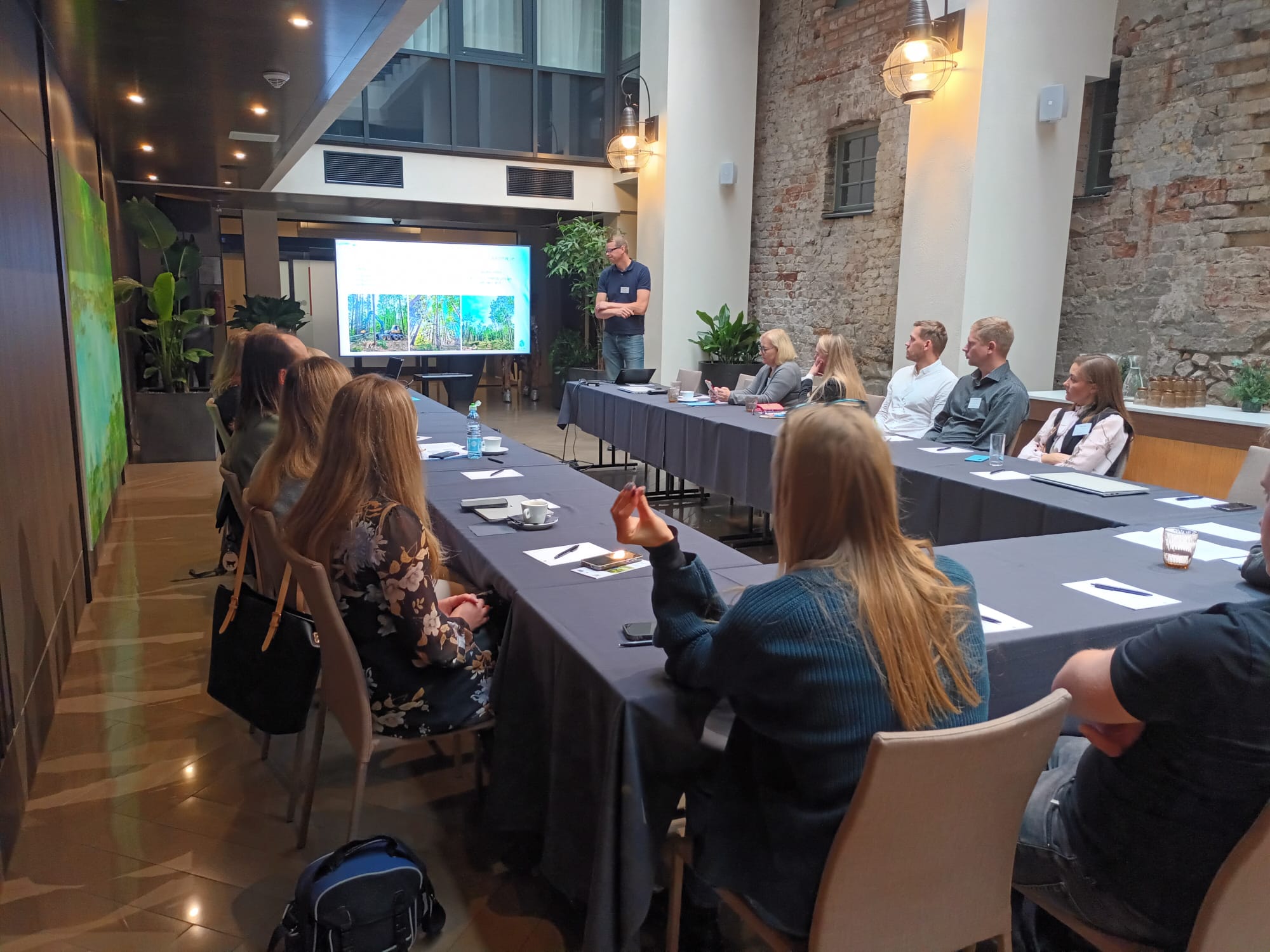
The second day of the conference took place in Riga and brought together experts in water management, forestry, agriculture, science and the environment from Latvia, Estonia, Finland, Poland and other countries, who exchanged knowledge and experience in the plenary and thematic sessions on designing management measures in zones where water, terrestrial ecosystems and human activities interact. By exploring the dynamics of different shore environments, the conference sought to identify improved approaches, practices and governance solutions for effective river basin management.
The conference was opened by Kristīna Veidemane, Chair of the Board of the Baltic Environmental Forum (BEF-Latvia), who stressed the need to look for smart solutions in places where water, land and human activity meet. The progress of the LIFE GoodWater IP project was presented by project manager Jānis Šīre from the Latvian Environment, Geology and Meteorology Centre. Miguel Villoslada from the University of Eastern Finland gave a presentation on the multifunctionality of interactions between aquatic and other ecosystems.
During the conference, six parallel thematic sessions were held, discussing issues related to forest–water interfaces, the impact of agriculture on water quality, the relationship between people and water, the importance of shore habitats and flood risk management.
Session Forest and water – interaction
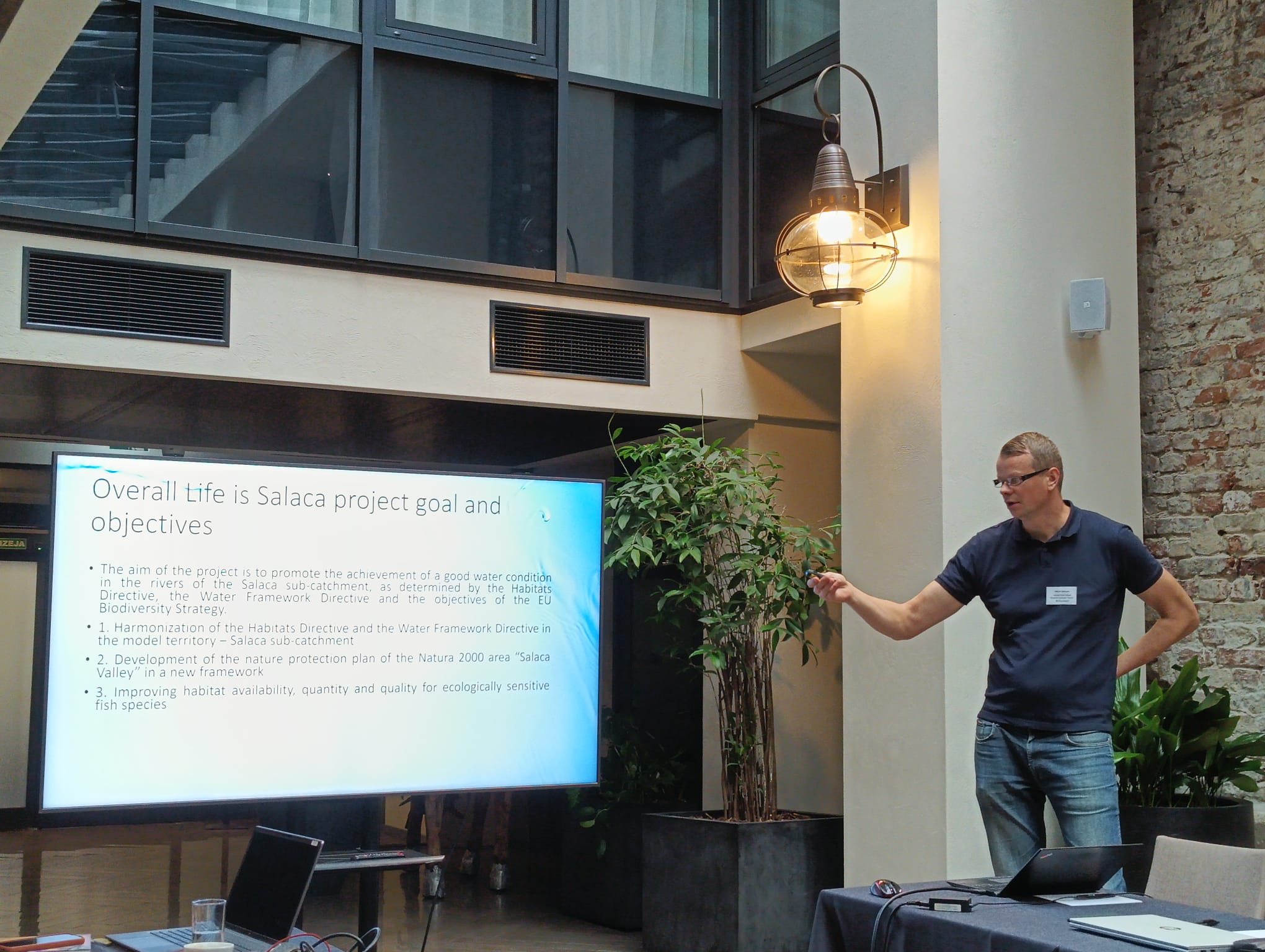
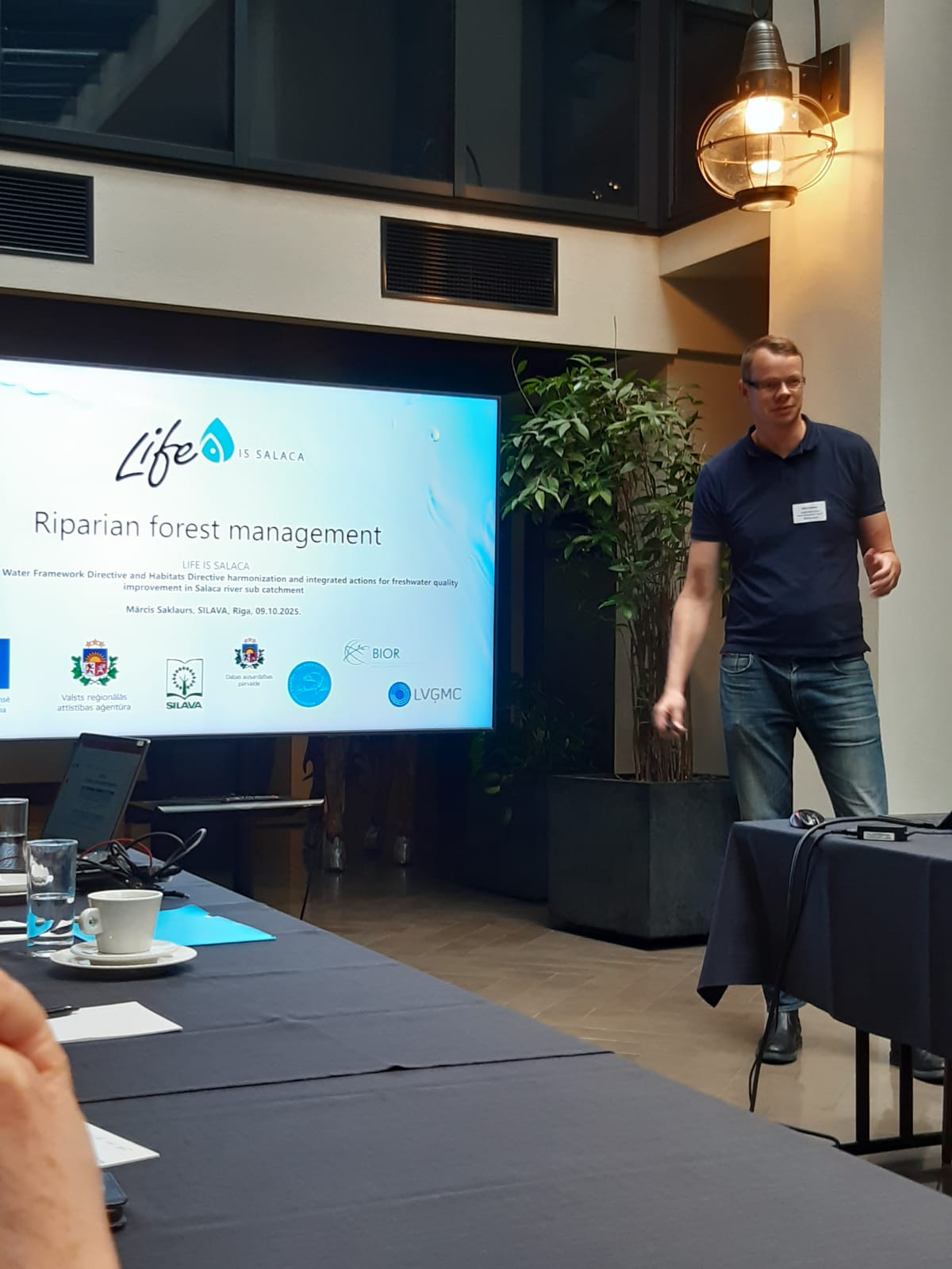
Mārcis Saklaurs, lead riparian forest expert at LSFRI “Silava”, gave a presentation on the LIFE IS SALACA project’s experience in managing riparian forests. In his presentation he stressed “how important forest–water interfaces are for maintaining healthy ecosystems – they act as a natural filter, regulating the flow of nutrients, sediments and carbon, improving water quality and providing habitats.”
Toms Štāls from LSFRI “Silava” talked about strengthening riparian zones through forest management and infrastructure (LIFE GoodWater IP), while Jürgen Sarjas, junior researcher in environmental technology at the University of Tartu, spoke about the environmentally friendly maintenance of forest land drainage systems.
Session – Waterside and people – interaction
Anda Ruskule from BEF-Latvia gave the presentation “Assessment framework for cultural ecosystem services of freshwaters in Latvia (LIFE GoodWater)”.
Kristīna Skriba from Augšdaugava Municipality spoke about improving the ecological quality of Lake Sila by mowing reed beds (LIFE GoodWater IP), while Paul Teesalu from the Estonian University of Life Sciences talked about restoring shallow bays and lakes: a biomanipulation experiment in Lake Harku (LIFE SIP WetEST).
In the session Agriculture and water – interaction there were six presentations, given by Ainis Lagzdiņš from LBTU, Svajunas Plunge from the Warsaw University of Life Sciences, Inga Retiķe from the University of Latvia, Annija Danenberga (Baltic Studies Centre), Anda Ruskule (UL) and Daiga Cepīte-Frišfelde (UL).
Session Floodplains and people
Speakers: Karlīna Putniņa from the Latvian Fund for Nature, Anita Zariņa from UL and Ingrīda Brēmere, BEF-Latvia.
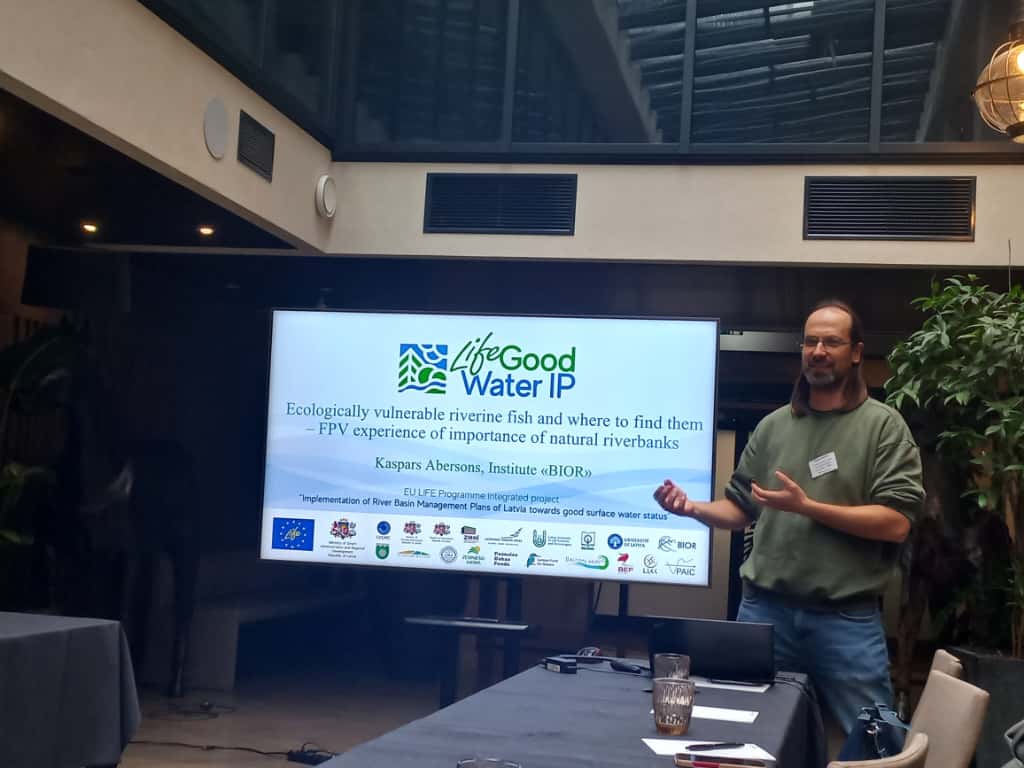
Session – Shore habitats – habitats for protected species
Kaspars Abersons (BIOR) gave the presentation “Ecologically sensitive river fish species and the importance of natural banks”. Laura Grīnberga (UL) presented “Results of monitoring biological quality elements in the demonstration rivers of the LIFE GoodWater IP project”, and Jolanta Jēkabsone (LEGMC) spoke about the impact of climate change on ecological flow and the availability of river habitats.
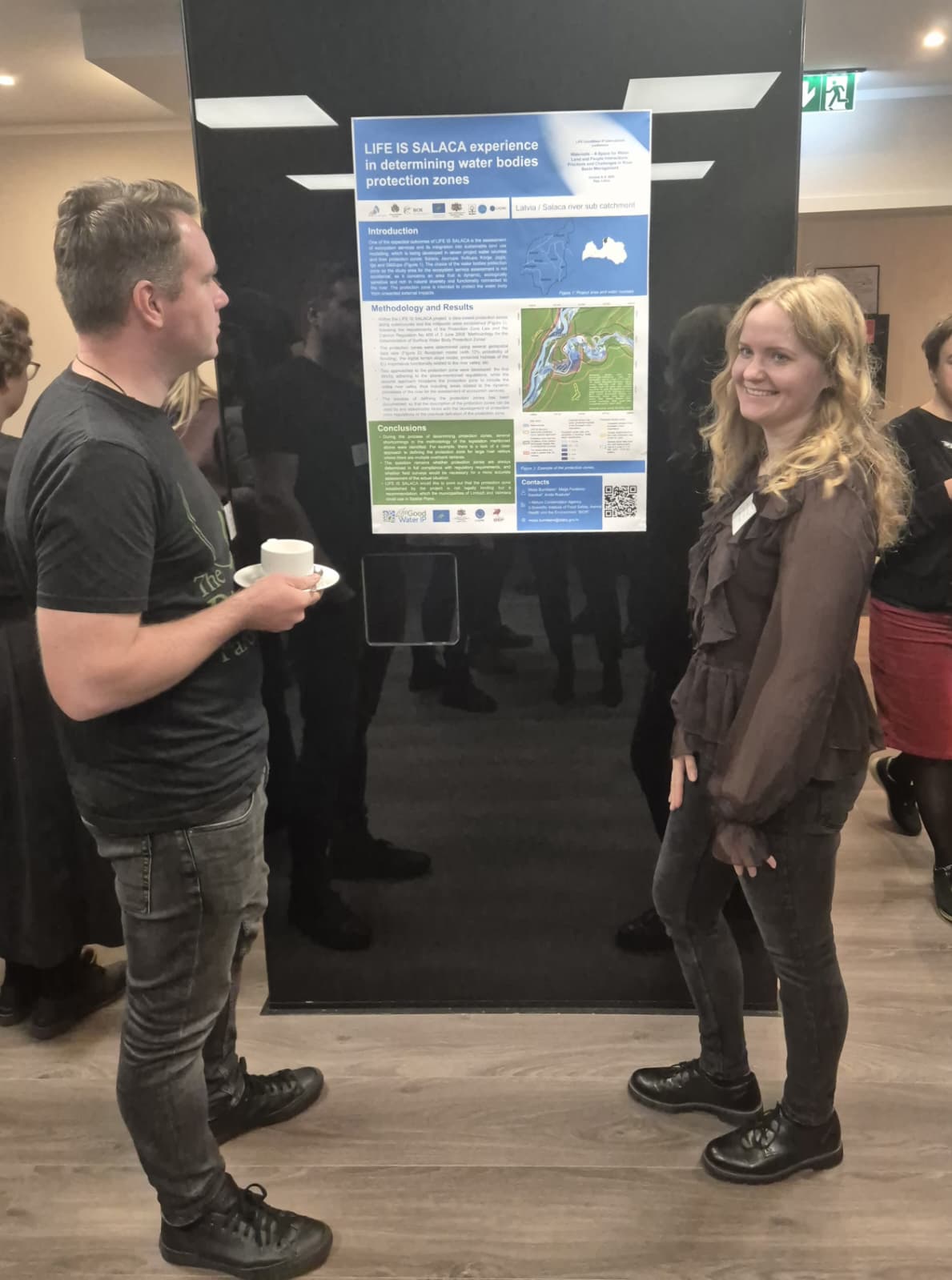
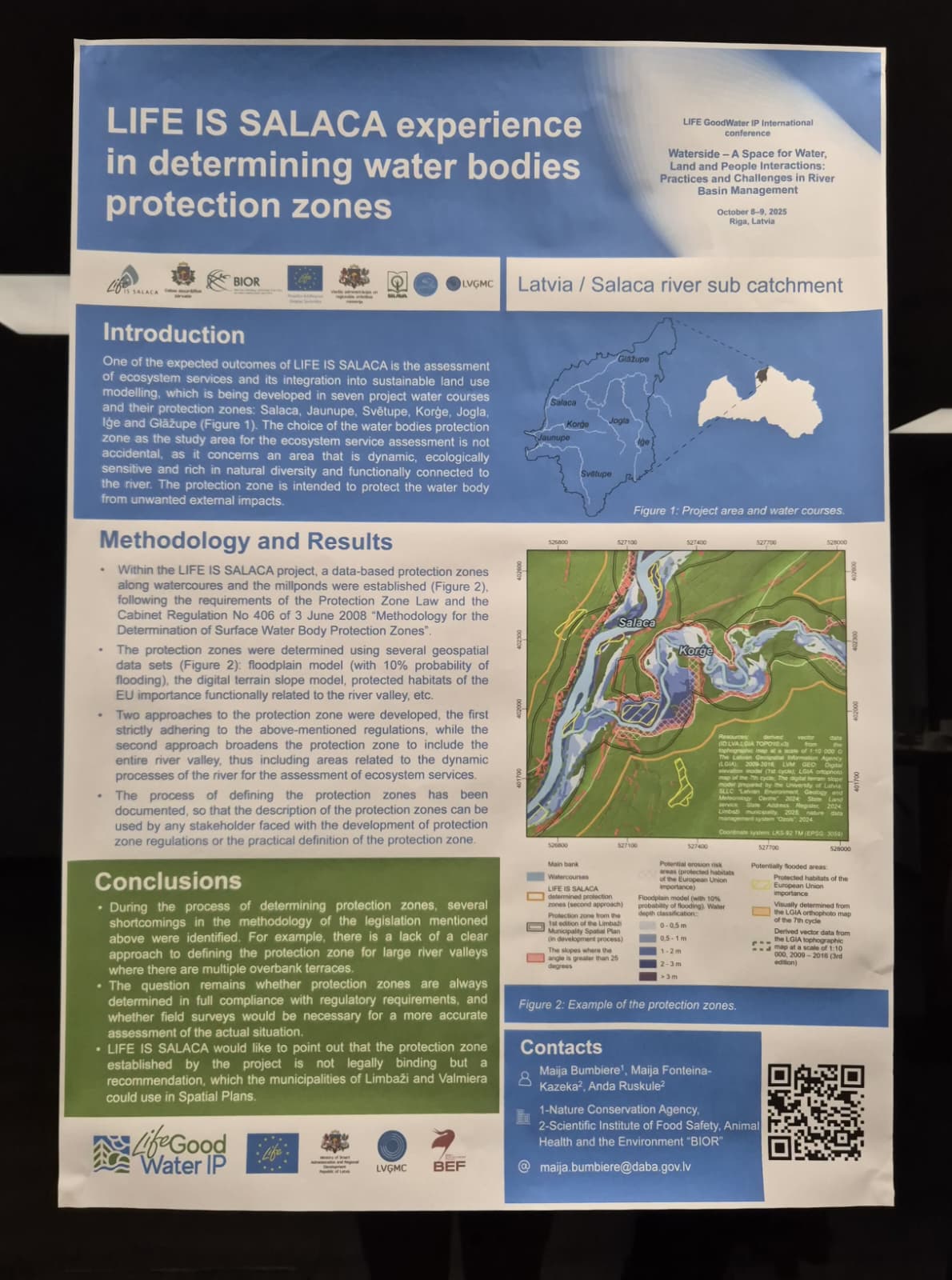
During the international conference, partners of the LIFE IS SALACA project from the NCA and BIOR presented their experience in determining the protection zones of water bodies.
One of the expected results of the LIFE IS SALACA project is an assessment of ecosystem services and its integration into a sustainable land use model, which is being developed in the project’s seven pilot areas and their protection zones – the Salaca, Jaunupe, Svētupe, Korģe, Jogla, Iģe and Glāžupe. The protection zones of water bodies are chosen to cover a dynamic, ecologically sensitive area that is rich in biodiversity and functionally linked to the river. The purpose of a protection zone is to protect the water body from adverse external influences; while determining them, some methodological shortcomings in the legal framework were identified.
The LIFE IS SALACA project stresses that the protection zone boundaries it has drawn up are not legally binding, but rather a recommendation that Limbaži and Valmiera municipalities can use in spatial planning.
The event ended with discussions on the common conclusions and opportunities for future cooperation between scientists, practitioners and policymakers.
The conference is part of the activities of the LIFE GoodWater IP project, which aims to improve the quality of Latvia’s surface waters by implementing the river basin management plans. The project is funded with support from the European Union’s LIFE programme and the Ministry of Environmental Protection and Regional Development.