

3 November – International Day…
03.11.26
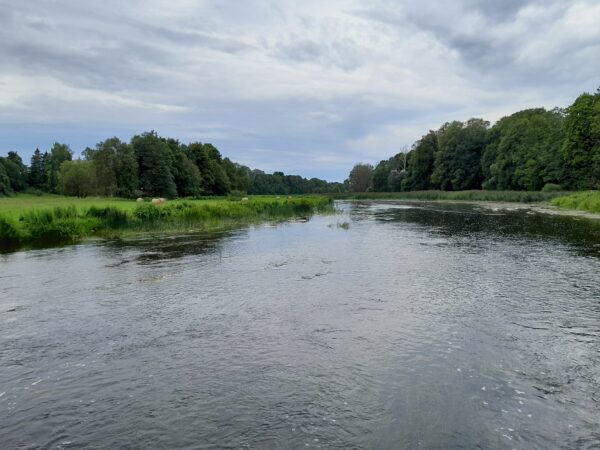
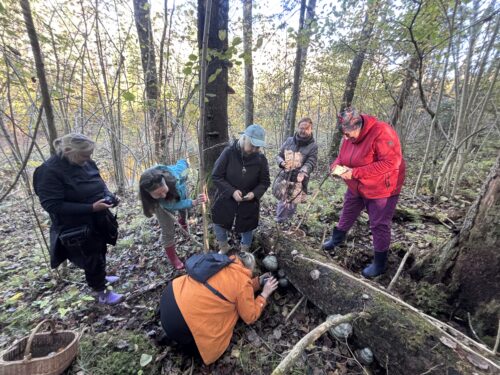
3 November is the International Day for Biosphere Reserves. The day draws attention to areas where protecting biodiversity goes hand…
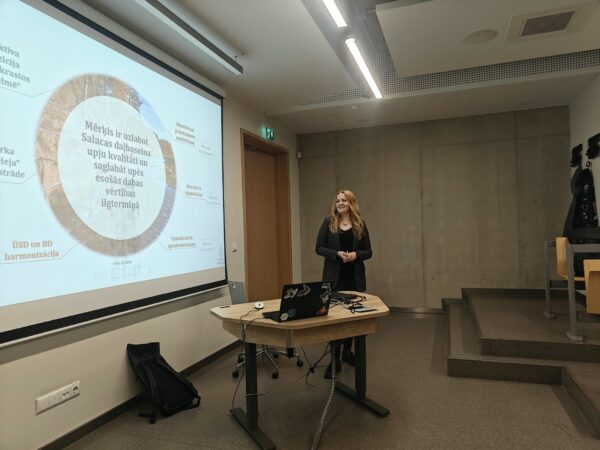
On 30 October 2026, LIFE IS SALACA project cartographer Maija Bumbiere spoke to University of Latvia Master’s students in Environmental Science during their “Environmental Planning” course about the project’s experience in defining water body protection zones. The presentation covered the project, its main activities, and why water body protection zones matter and how they are defined. It focused in particular on comparing the protection zones defined by the project with the information in municipal spatial plans. It should be stressed that the water body protection zones defined in the LIFE IS SALACA project have no legal force. They are advisory only.
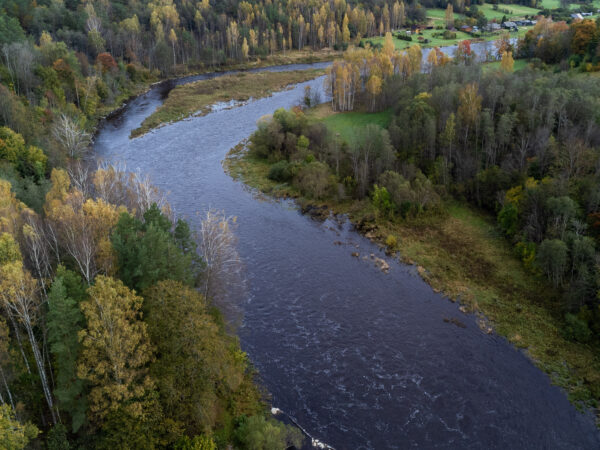
One of the LIFE IS SALACA project’s activities is an assessment of ecosystem services. As part of it, a model is being developed to show how different management practices affect riparian forests and how the total value of river ecosystem services will change in the future. The assessment covers seven project watercourses and their protection zones: the Salaca, Jaunupe, Svētupe, Korge, Jogla, Iģe and Glāžupe.
The presentation also covered the practical experience gained during the project and the challenges of defining the boundaries of water body protection zones. A key prerequisite is the availability of high-quality, suitable geospatial data. Such data are not always freely available, and processing and using them requires specific knowledge and skills in geographic information systems (GIS).
The work revealed several issues that need a clearer and more consistent approach. For example, in the valleys of large rivers with several terraces above the floodplain, it can be hard to determine where protection zone boundaries should run. Slope gradient criteria also need to be made more precise by setting a specific reference value. Agreement is also needed on the maximum distance a protection zone boundary may be extended when it is adjusted to follow clearly visible boundaries on the ground.
The LIFE IS SALACA project’s experience shows that defining water body protection zones is a complex process. It depends on understanding the regulatory requirements, on high-quality geospatial data and on practical assessment of the area. The challenges and issues raised during the project can serve as a basis for improving the approach further. They can also help build a shared understanding of how water body protection zones are defined and why they matter for protecting aquatic ecosystems.
Sharing the project’s experience with future environmental science professionals is also a chance to introduce students to practical questions of nature conservation and spatial planning. It shows how findings from research and projects can help improve environmental governance.
Photo: A. Ruskule, Andris Soms, Jānis Ukass
Co-funded by the European Union. This information reflects only the views of the LIFE IS SALACA project partners. The European Union and the European Climate, Infrastructure and Environment Executive Agency (CINEA) are not responsible for any use that may be made of the information it contains.