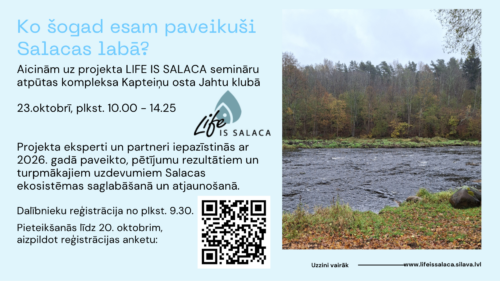


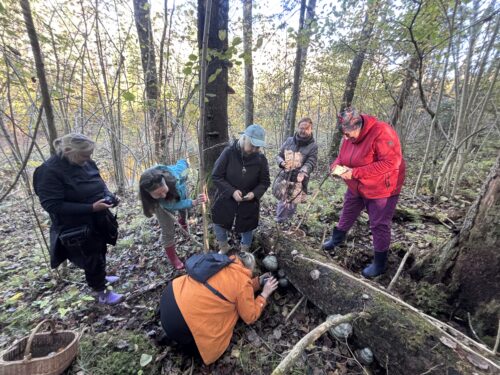
On 18 October 2026, the Latvian Mycological Society held an excursion in the “Salacas ieleja” (Salaca Valley) Nature Park. Its…
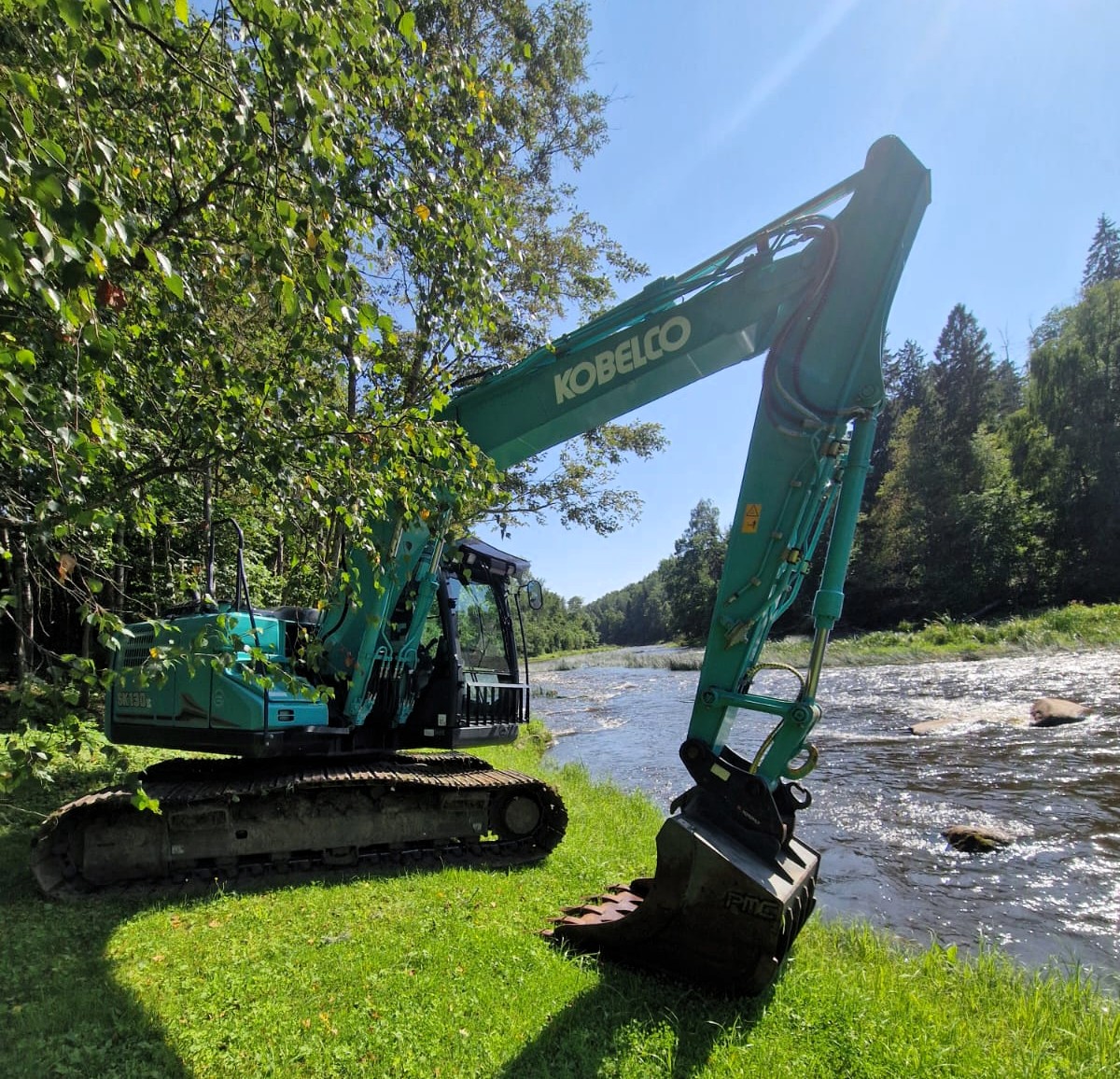
Within the LIFE IS SALACA project, the association “Fishing Club “Salackrasti”” has started restoring the rapids of the Salaca.
The head of the association, Atis Apelis, says:
“Clearing and restoring the Salaca rapids is the main task of “Salackrasti”. This year we started work at the very end of July. The water level is suitable for working in the river with machinery and clearing the bed of the Salaca. We plan to continue the work until 15 September and hope to get everything planned done.”
During rapids restoration, common club-rush and other emergent plants are removed from the river, together with the dense root system they have formed. In this way, spawning and living areas suitable for salmonid fish are restored.
The work is done with a tracked excavator fitted with a specially designed bucket. This makes it possible to remove the overgrown vegetation while keeping as much as possible of the substrate typical of rapids – pebbles, stones and gravel. To reduce the impact on the environment, the machinery runs on biodegradable oils, preventing polluting substances from entering the river.
The Salaca is one of the most important salmon rivers in the Baltics and one of Latvia’s most valuable watercourses for the conservation of fish fauna. However, in many places its rapids have become densely overgrown over the years. This reduces the quality of habitats for fish typical of fast-flowing, oxygen-rich rivers, such as salmon and minnows, while encouraging the spread of more ecologically tolerant species such as pike, chub, roach and perch.
To preserve the ecological value of the Salaca as one of the most important salmon rivers in the Baltics and to provide suitable conditions for salmonid spawning and development, rapids restoration works are being carried out again this year within the LIFE IS SALACA project.