

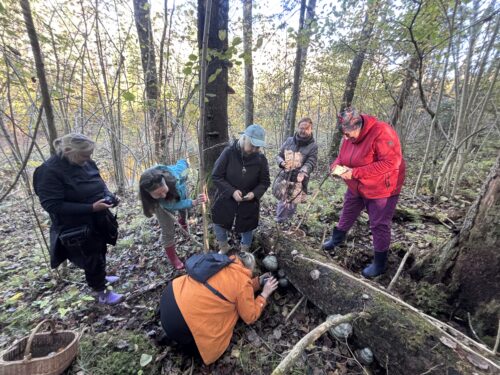
On 18 October 2026, the Latvian Mycological Society held an excursion in the “Salacas ieleja” (Salaca Valley) Nature Park. Its…

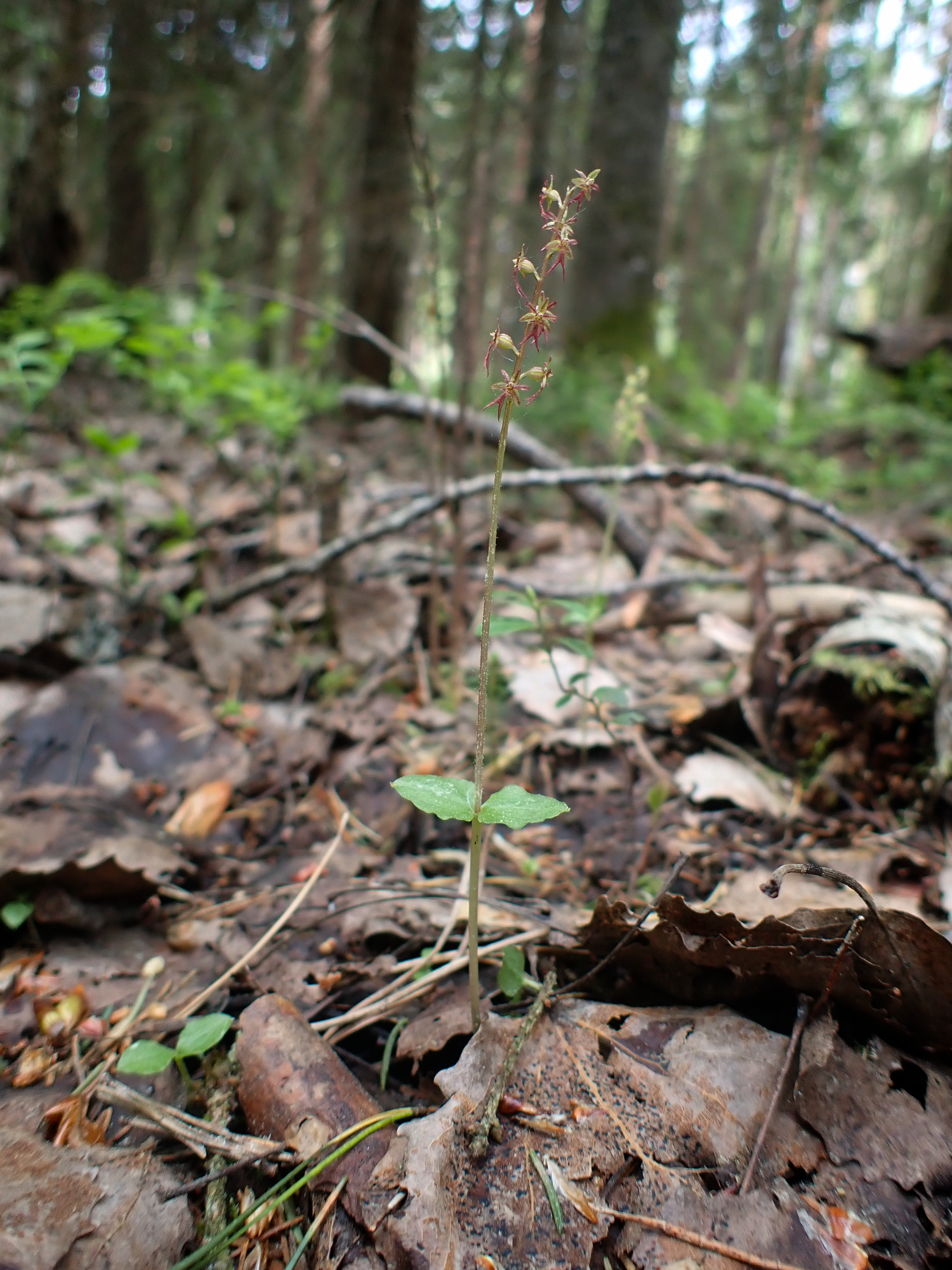
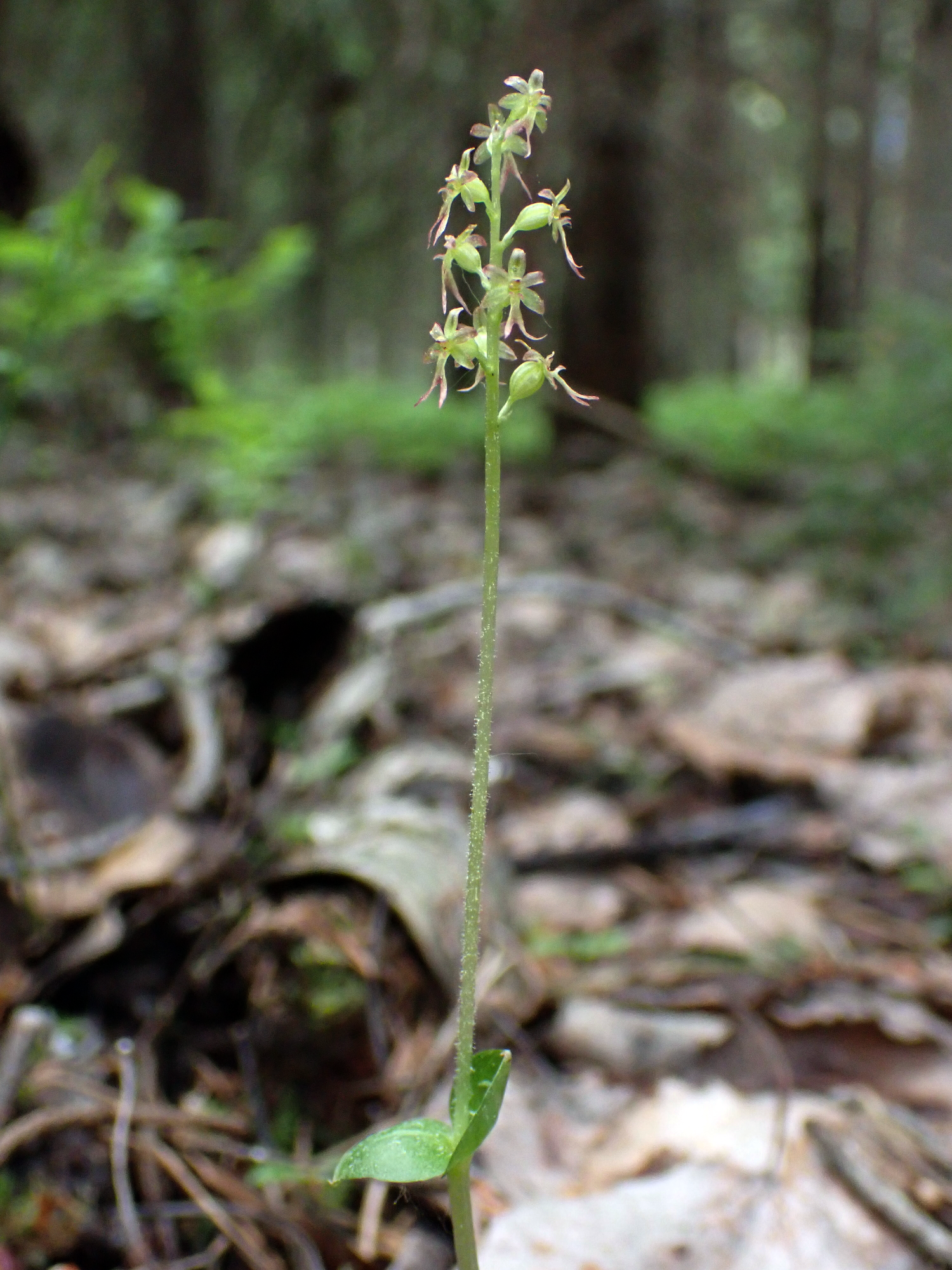
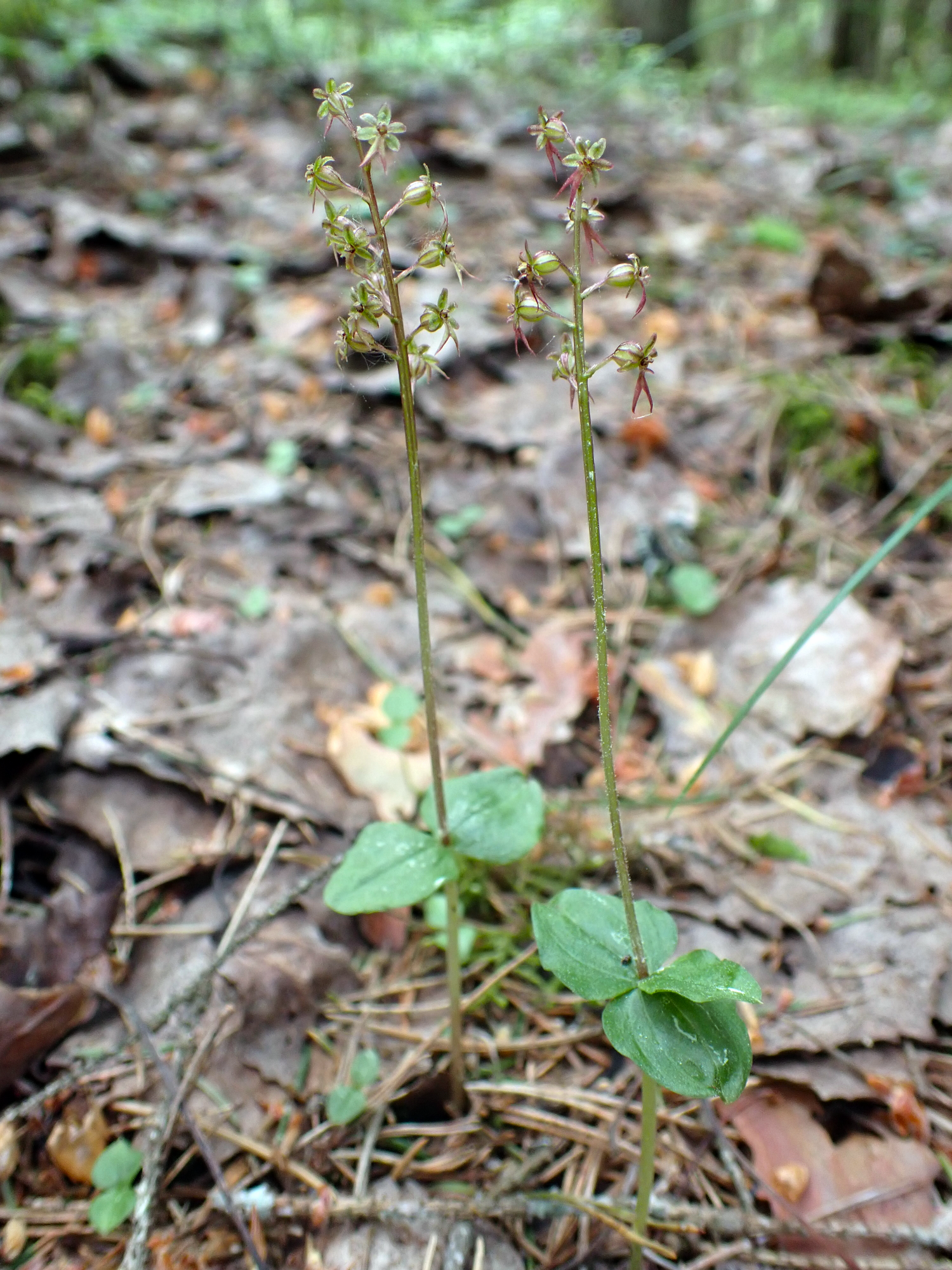
At the end of May, while surveying the area as part of drawing up the nature conservation plan, nature expert Ilze Ķuze found a rich site of the specially protected vascular plant species heartleaf twayblade (Listera cordata) in the “Salacas ieleja” (Salaca Valley) Nature Park, north of the Dauģēni cliffs.
About 300–400 heartleaf twayblade plants were found in the surveyed area, about 50 of which were in flower. Given that this specially protected plant species is relatively rare in Latvia, and that such large and concentrated sites are particularly rare, the discovery can be considered significant in terms of natural values.
The heartleaf twayblade is included in Latvia’s list of specially protected species and in the Latvian Red Data Book. According to the latest assessment by the International Union for Conservation of Nature (IUCN), the species is considered vulnerable (VU). The species is also listed in Appendix II of the Washington Convention, or CITES Convention, which regulates international trade in endangered species of wild fauna and flora. In addition, the heartleaf twayblade is considered one of the indicator species of natural forest habitats, signalling the presence of high natural values in a given area.
The heartleaf twayblade is rare in Latvia, and most of the known sites are concentrated in the western part of the country. That is why every new find in the eastern regions of Latvia is particularly important. The “Salacas ieleja” Nature Park is one of the areas where conditions suitable for the species have survived.
The species is most often found in moist, partly shaded places with acidic, nutrient-poor soils. In Latvia, it grows mainly in undisturbed moist mixed, coniferous and swampy forests, and less often in transition mires and raised bogs.
The main threats to the heartleaf twayblade are the drainage of bogs and wet forests, as well as intensive forestry, which can significantly affect the habitat conditions the species needs.
The newly discovered site confirms the importance of the “Salacas ieleja” Nature Park for biodiversity conservation and highlights the need to continue researching and protecting the area’s natural values.
Photo: Ilze Ķuze