

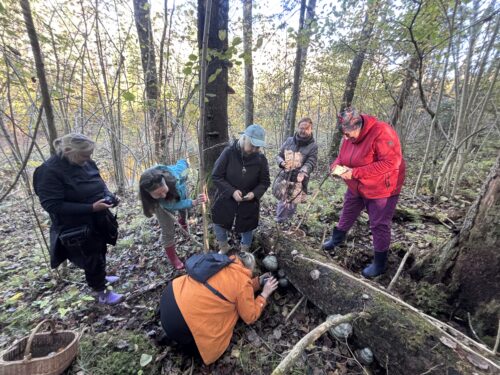
On 18 October 2026, the Latvian Mycological Society held an excursion in the “Salacas ieleja” (Salaca Valley) Nature Park. Its…

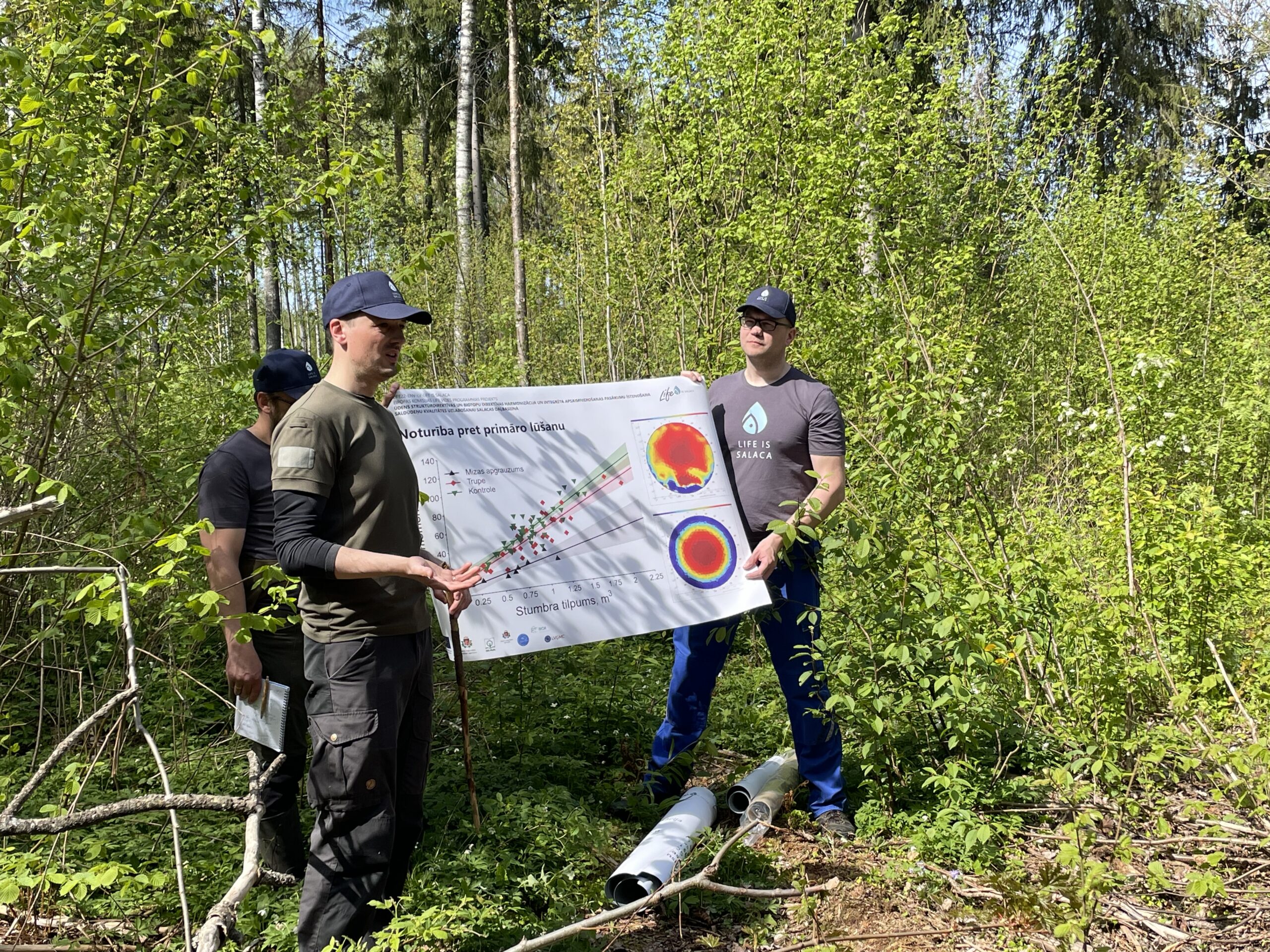
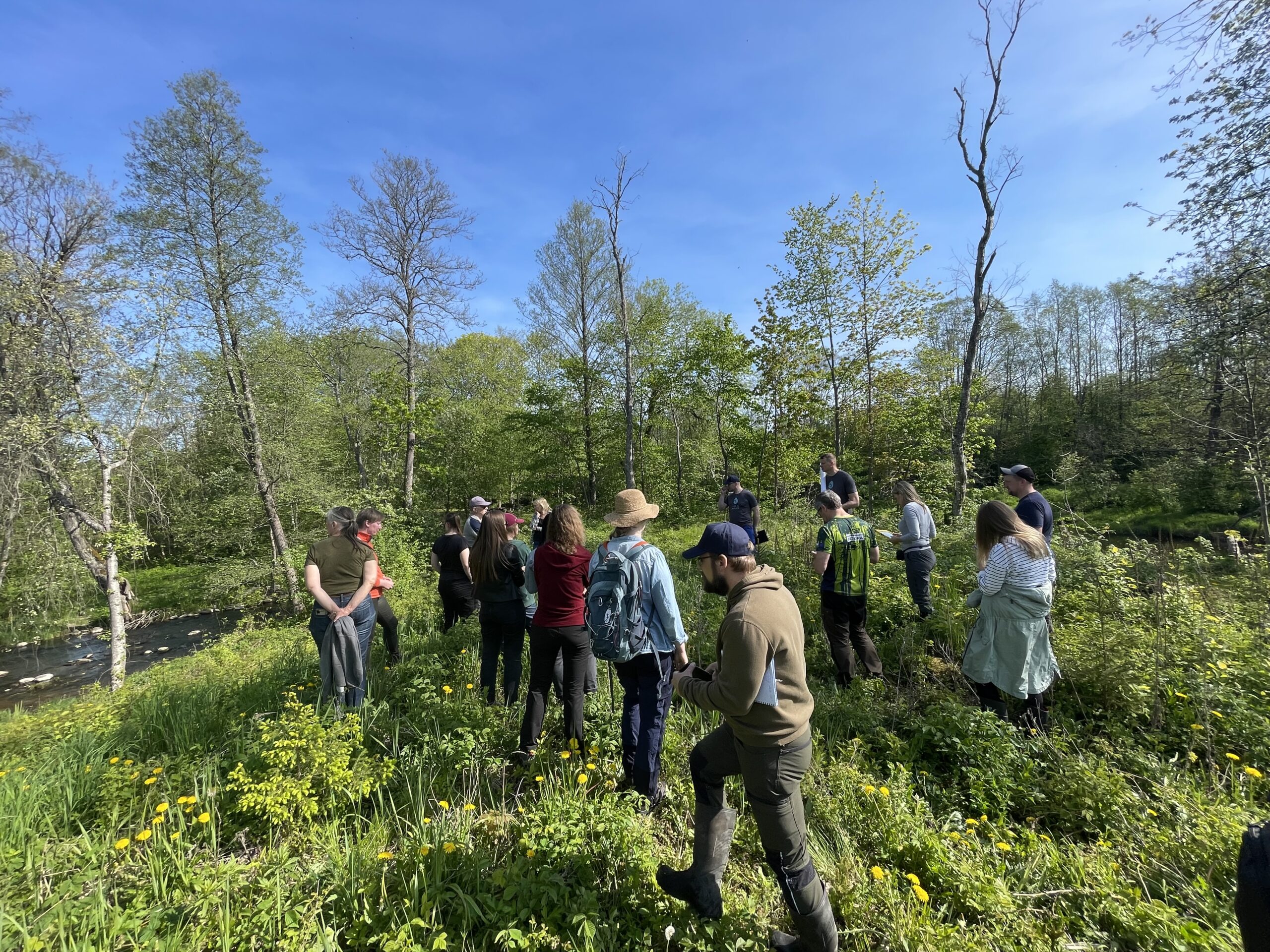
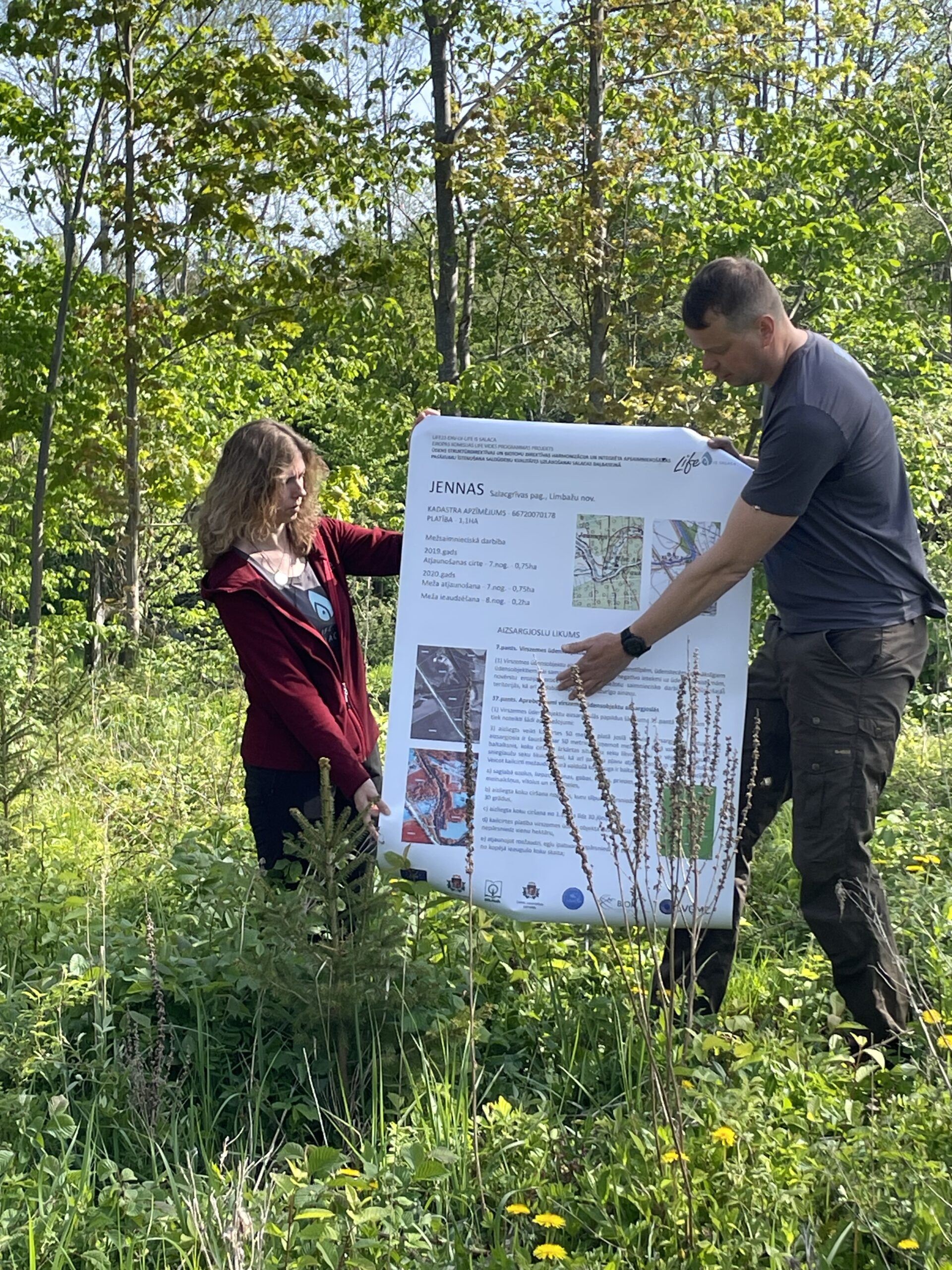
On a sunny 15 May, together with experts in the field, representatives of LSFRI Silava led an experience-sharing seminar in the riparian forests on the banks of the Svētupe: “Riparian forest management, biodiversity and shaping future stands”.
The meeting took place within the LIFE IS SALACA project with the aim of drawing attention to the interplay between natural processes and human economic activities in riparian forests, and discussing how, where and in what way scientists, researchers, experts, forest owners, officials and society as a whole can get involved and help improve the management of these important areas.
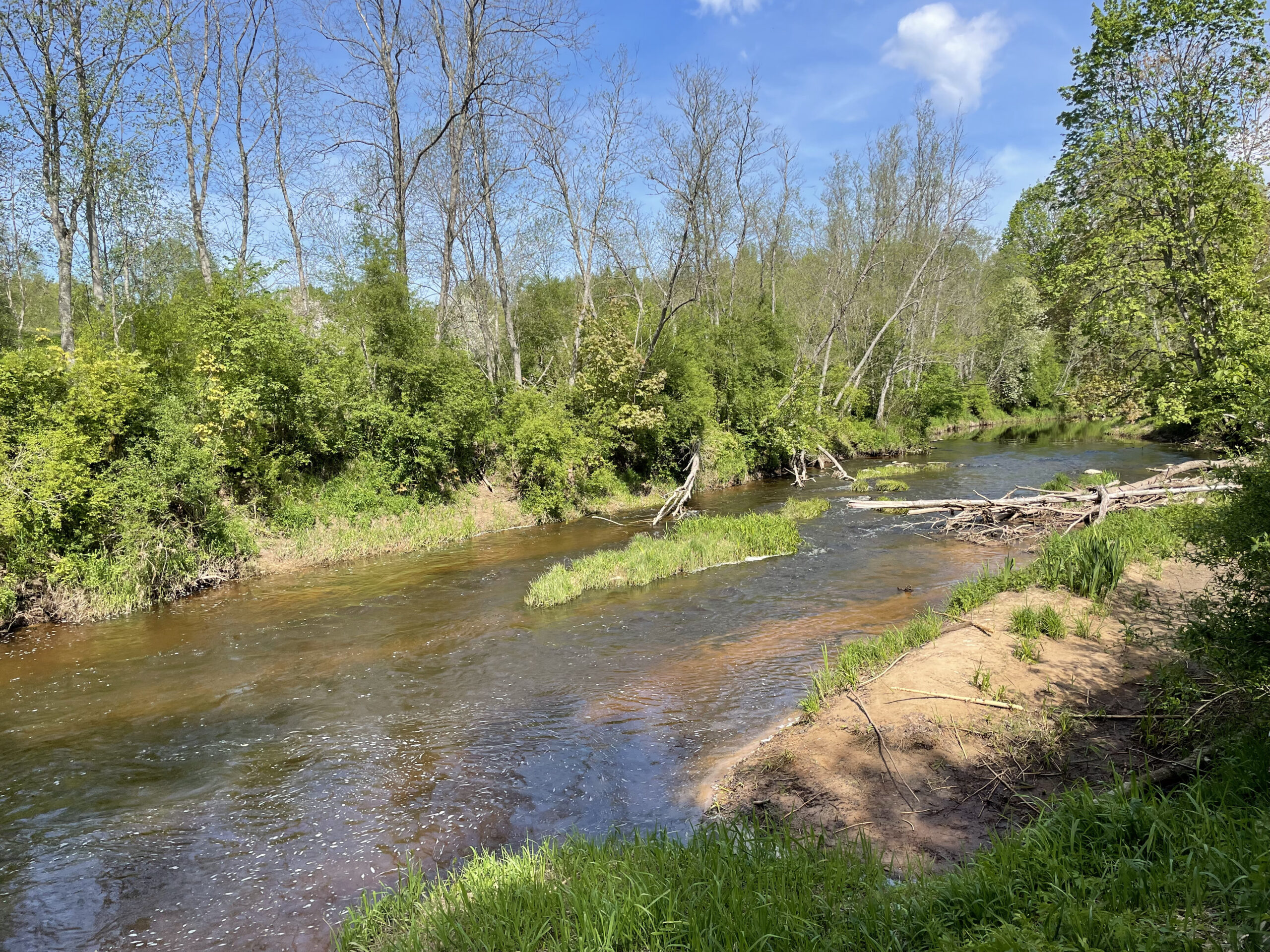
During the experience-sharing day, together with representatives of LSFRI Silava, we walked along the riverbanks and looked at good and not-so-good examples of how managed and unmanaged forests next to the river live and affect their surroundings over the years. One of the topics of discussion was grey alder, which is common in such areas. It is a fast-growing tree that grows in wet and shrubby meadows, fens, river valleys and alluvial soils. Grey alder quickly overgrows unmanaged areas, abandoned meadows and grasslands that used to be a natural riverside landscape.
Most of these stands are now ageing, and as they rapidly collapse, the nutrients stored in them are released. Through surface and groundwater runoff, these nutrients end up in rivers, contributing to their overgrowth and, consequently, to the deterioration of the water and the whole ecosystem. These trees often break and fall into the river, where they remain, slowing down the flow and blocking fish migration routes and spawning grounds.
During the meeting, the question was raised several times: why should people intervene in natural processes at all?
In the past, such riparian forests were most likely pastures, natural grasslands, which are now one of the most endangered ecosystems in Latvia, with very little of them left (less than 1%). In addition, different land management tools were used. As the rhythm of human life and the global climate have changed, so has the pace of coexistence between people and nature, so we need to find ways to continue living side by side as effectively as possible, with the least harm to both.
We have all noticed that winters tend to be warmer and summers have more rapidly changing weather, in what used to be spring we already feel a breath of summer, new species are entering Latvian flora and fauna, and some familiar species are disappearing. For example, this winter the Svētupe froze and thawed three times. Water levels in spring are no longer as high, and the ice drift that naturally “weeds” the river has not been seen for years. The historical floating of timber to the port of Salacgrīva is now unimaginable. Spring floods, when the river overflowed its banks, have practically disappeared because of extensive land drainage. There are no pastures on the riverbanks, as subsistence farming has been replaced by supermarkets, fast delivery and the boom in technology.
Therefore, to preserve biodiversity and continue to enjoy the gifts that nature gives us, people must take care of the areas along rivers. The missing herds must be replaced by well-thought-out traditions of riparian forest management: leaving valuable tree species, making room for light-sensitive herbaceous plants, clearing organic sediments from riverbeds, and improving living conditions for the fish and plants typical of rapids.
Representatives of the following organisations were invited to the riparian forest management day: the Nature Conservation Agency, the Latvian Fund for Nature, the Forest Owners’ Association of Latvia, JSC “Latvijas valsts meži”, the Ministry of Environmental Protection and Regional Development, the Institute of Food Safety, Animal Health and Environment “BIOR”, the Latvian Environment, Geology and Meteorology Centre, the association “Fishing Club “Salackrasti”” and the Faculty of Forestry of the Latvia University of Life Sciences and Technologies.
The event was carried out within the LIFE IS SALACA project, “Adaptation of Water Framework Directive and Habitats Directive harmonization and integrated actions for freshwater quality improvement in Salaca river sub catchment”, with financial support from the European Union’s LIFE programme and the State Regional Development Agency. The aim of the project is to help achieve good water status in the rivers of the Salaca sub-basin.