

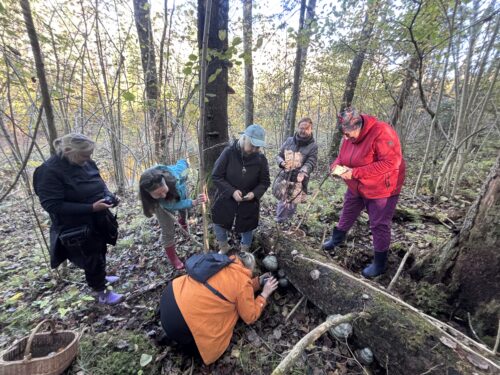
On 18 October 2026, the Latvian Mycological Society held an excursion in the “Salacas ieleja” (Salaca Valley) Nature Park. Its…

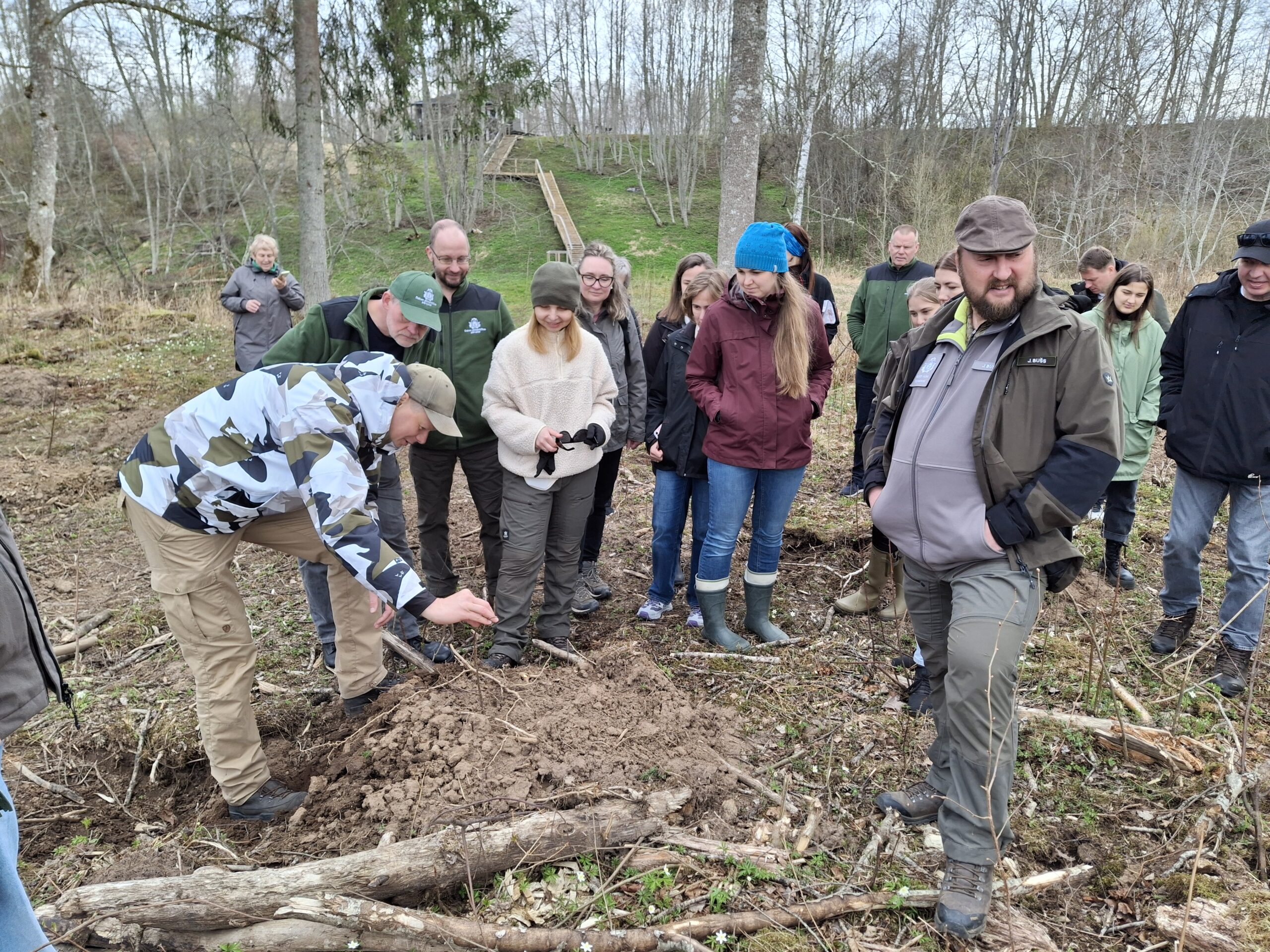
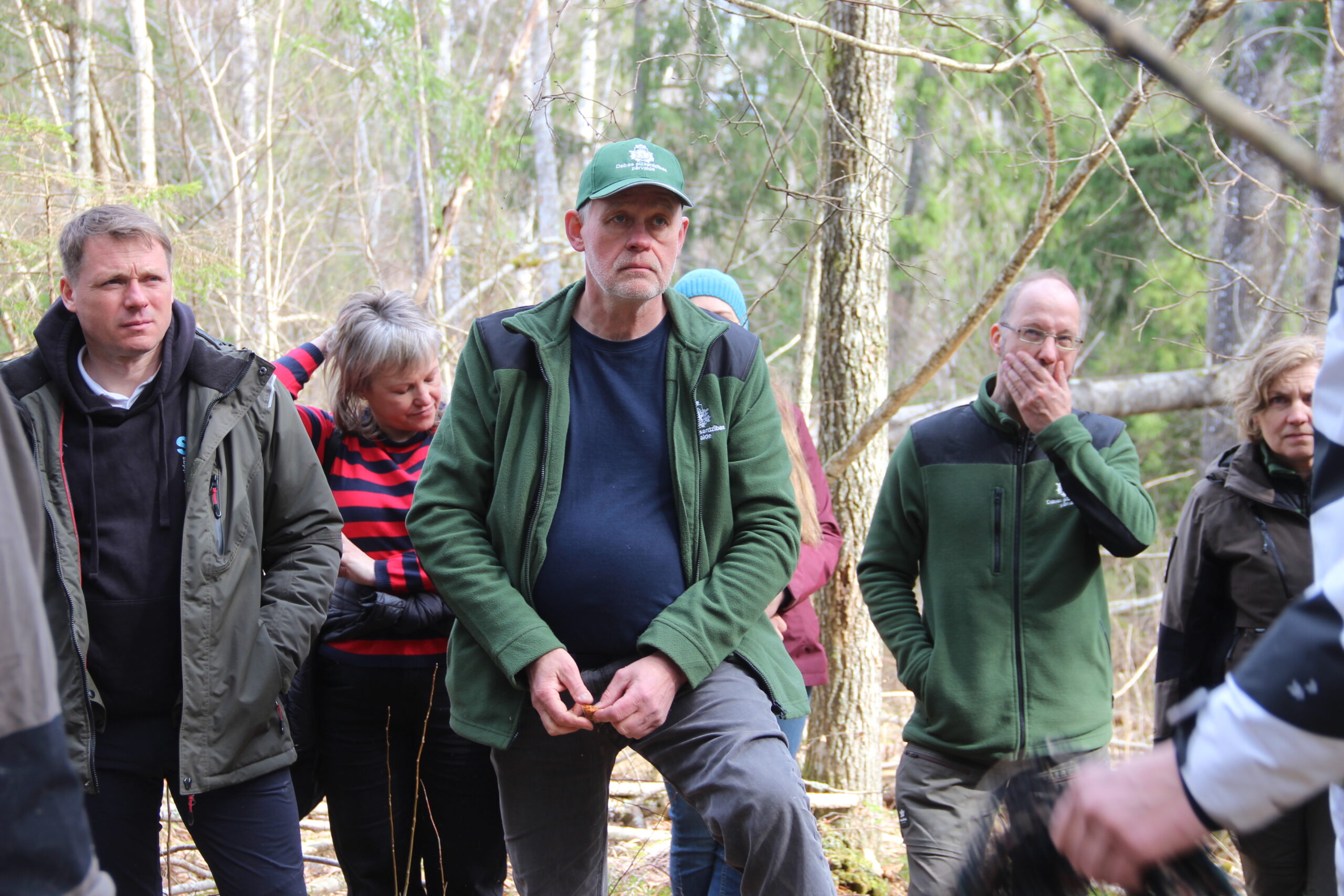
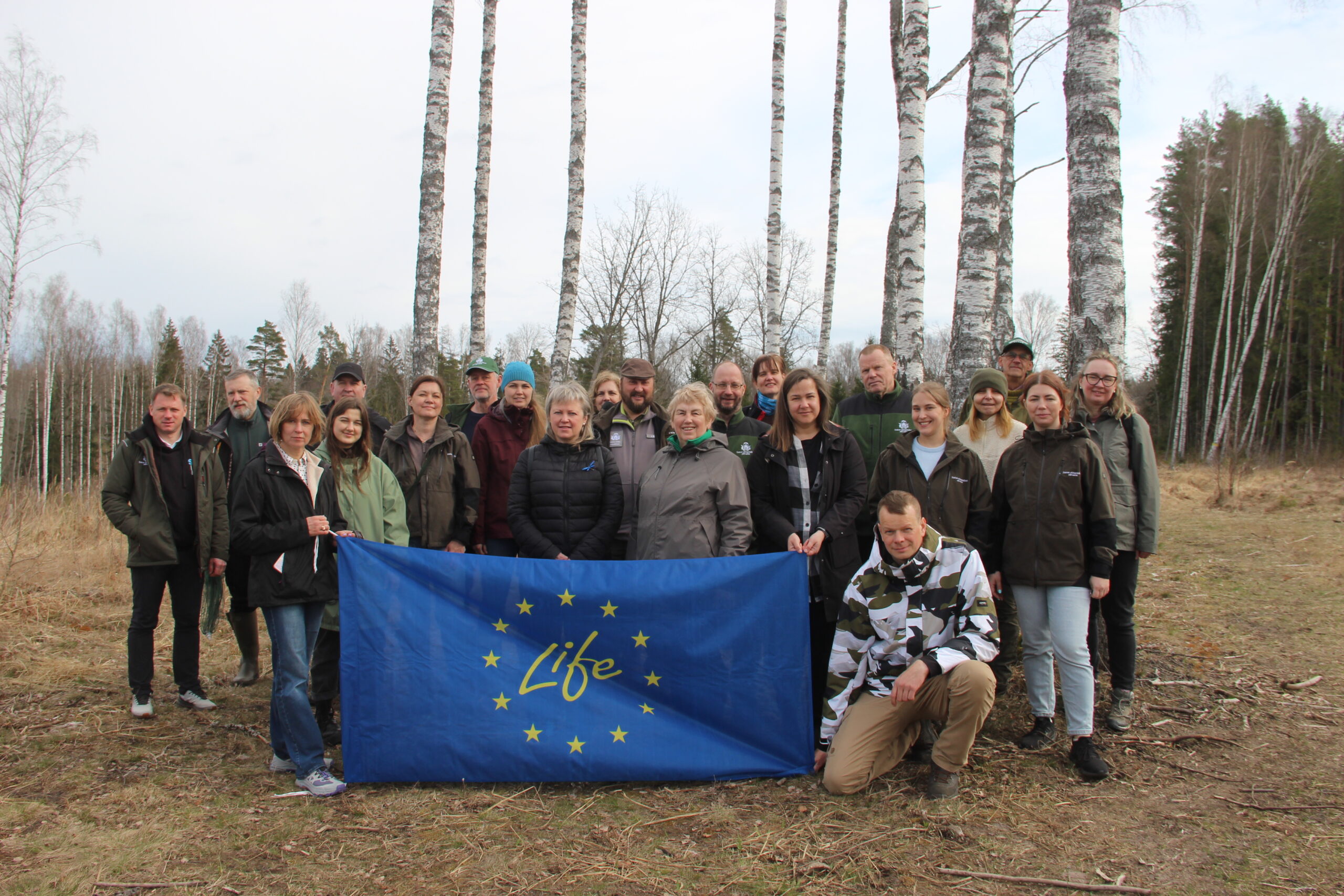
On 17 April, at a practical field seminar, Mārcis Saklaurs, lead forest expert at the Latvian State Forest Research Institute Silava, introduced staff of the Vidzeme Regional Administration of the Nature Conservation Agency to the riparian forest management being carried out within the LIFE IS SALACA project. Specialists from various Vidzeme municipalities took part in the seminar.
The aim of this activity of the LIFE IS SALACA project is to demonstrate a new approach to riparian forest management, nutrient retention and reducing eutrophication. This can be done by choosing the optimal tree species composition in the stand, which will have a positive effect on and increase vegetation diversity, as well as improve the quality of watercourses by providing diverse living conditions for the plant and animal species living in and along the river.
Mārcis Saklaurs explained the current situation in legislation and in reality on the ground, pointing out why riparian forests are important. In Latvia, only 34% of rivers and lakes are of good or high ecological quality, and one of the main reasons for this is excessive nutrient input into waters and alterations to riverbanks.
Although the Protection Zone Law sets restrictions on riparian forest management, the current approach does not always deliver the best results. Every year, a considerable amount of sediment enters rivers, worsening water quality and reducing their natural capacity for self-purification. The common overmature grey alder stands are no longer able to take up nutrients effectively enough.
The expert stressed that the project is testing a new approach – creating more diverse stands where different tree species grow side by side, such as oak, lime, maple, spruce, pine, larch and others (9 in total). This approach helps reduce eutrophication, improve water quality, promote biodiversity and create more suitable conditions for plants and animals. Mārcis Saklaurs emphasised that in managing riverbanks it is essential to find a balance between nature conservation, water quality and economic activity. He invited the Nature Conservation Agency staff to discuss how to reach and educate forest owners and managers more effectively about smart and sustainable forest management.
The expert pointed out that there are currently different views in society – some believe riverbanks should be left entirely to natural development, others that they can be used for timber production. Meanwhile, legislation primarily emphasises water protection. Science is increasingly looking for ways to balance these interests.
Mārcis Saklaurs noted that there is still no clear answer as to which approach is better – managing riparian forests more intensively, as is done, for example, in Estonia, Sweden and Finland, or keeping them in a natural state. “There are various hypotheses, but there is no clarity yet,” he admitted. At the same time, the researcher stressed that clear-cuts on riverbanks should not be allowed, but that smart and balanced solutions for managing the banks need to be found – preventing trees from falling into the river while not creating unnecessary risks for owners. “We need to find a way of working so that people are not afraid of penalties but understand how to act correctly. This story still has to be written and moved forward,” stressed M. Saklaurs.
In the experimental areas, including on private land, various management methods are being tested, such as selective felling and changing tree species. The aim is to achieve diverse vegetation and, in the long term, rich, natural riverbanks.
Properly managed riparian forests and rapids restoration are expected to improve the ecological quality of the Salaca and its tributaries. Some areas will be set up as demonstration sites so that the experience gained can also be used elsewhere in Latvia.
Work on the nature conservation plan for “Salacas ieleja” will start this year, and the project results will be integrated into it. A nature education centre with the interactive exhibition “On the banks and in the depths of the Salaca” is also being created in Salacgrīva. The exhibition will present information about the Salaca River, its history and management, freshwater quality, and the various species and habitats living in it in popular-science language.
During the project, riparian forests will be managed on an area of 65 ha, and good practice guidelines and recommendations for amendments to legislation will be developed.
The seminar participants looked at the tree planting carried out at the end of March on a private owner’s land. Looking at the planted trees, the conclusion is clear – they are growing.
The aim of the LIFE IS SALACA project is to help achieve good water status in the rivers of the Salaca sub-basin by carrying out practical management measures, building a knowledge base and sharing experience with the public.
The project is implemented by the Latvian State Forest Research Institute Silava in cooperation with the Nature Conservation Agency, the Latvian Environment, Geology and Meteorology Centre, BIOR and the association Fishing Club Salackrasti, with support from the European Union’s LIFE programme.
At the end of the seminar, Mārcis Saklaurs presented the projects he is currently working on. One of them is an elk tagging project in which 20 elk in Latvia and 20 in Estonia are fitted with GPS transmitters to study their migration. He also talked about the LIFE RiverFlow project, which among other things plans the removal of the Staicele dam.